
Robots in Hospitality: What Works Today, What Doesn’t, and What Hotels Should Invest In Now

Atualizado: 20 de jan.
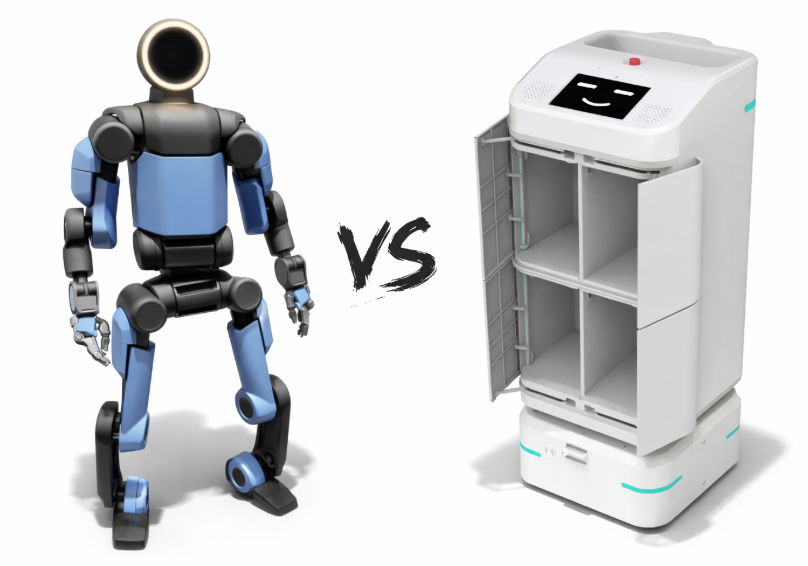
Let’s talk about robots in hospitality. We have been closely following and studying how robots are evolving in the hotel industry and there are some key takeaways worth highlighting.
Humanoid robots can already handle very specific tasks quite well. Still, they are not truly “human-like” yet. They struggle to deal with every situation or adapt to all environments. What we often see in humanoid brand demos today is mostly showmanship: impressive and full of promise, but still far from being practical at scale. This is normal. Cutting-edge innovation like humanoids needs time to mature, even if that time is getting shorter thanks to new breakthroughs, increased investment, and strong global competition in AI, robotics and technology.
Meanwhile, simpler and highly specialized robots are already proving their value. These machines are designed to do just one task and because of that, they have reached very high levels of reliability and trust. They work, and they work extremely well. They may not look as exciting as humanoids, but they deliver exactly what they are built for and cost, on average, three or four times less.
Today, these robots can handle tasks such as:
Room service and room delivery, including autonomous elevator use
Logistics support for housekeeping teams
Autonomous cleaning of public areas
Basic guest service support, like simple requests and directions
On-demand food preparation, 24/7
Baggage handling
Mobile in-hotel promotion, including upselling, wayfinding, and offers
Check-in and concierge
Humanoid robots, on the other hand, are still in a heavy training phase. Some can already perform very specific tasks with good results, but they are still expensive, costing between $20,000 and $30,000.
Experts estimate that we are still 5 to 7 years away from a truly versatile humanoid that can handle multiple tasks like a human.
This timeline will depend on future investment levels and how fast training technologies evolve.
On the other hand, specialized robots, priced between $11,000 and $15,000, are available right now. They are reliable, easy to deploy, simple to use, and offer a very attractive return on investment. In many cases, they are not the future of hospitality, they are already part of its present.
Here’s something to get you thinking, or maybe even inspire you. Star Wars fans will likely notice the parallel between the advanced like C-3PO, human-like humanoid robots and the older, more specialized ones like R2-D2, super efficient and top-notch at what they’re built for.

Science fiction is no longer just fiction, it’s already here. In places like China and the U.S., many young people are growing up as true “robot natives,” and this trend is quickly spreading. What once seemed like imagination is now becoming part of daily life, especially in the hotel industry. Robots are taking on key roles in hotel operations, and that’s changing everything, from how we work to how much we pay for a product or service. While this shift may raise concerns about the future of jobs, it also brings opportunities, like staying in quality hotels for as little as €30 a night, all thanks to advanced technology.
Where can we find the right balance, one that ensures everyone’s well-being while still moving forward for the better? That’s a question we should be exploring more deeply and preparing for, more seriously.
Stay tuned, we’ll have news soon.
Comentários